Assets & Equipment
Private Power Poles: Ownership, Inspection and Replacement
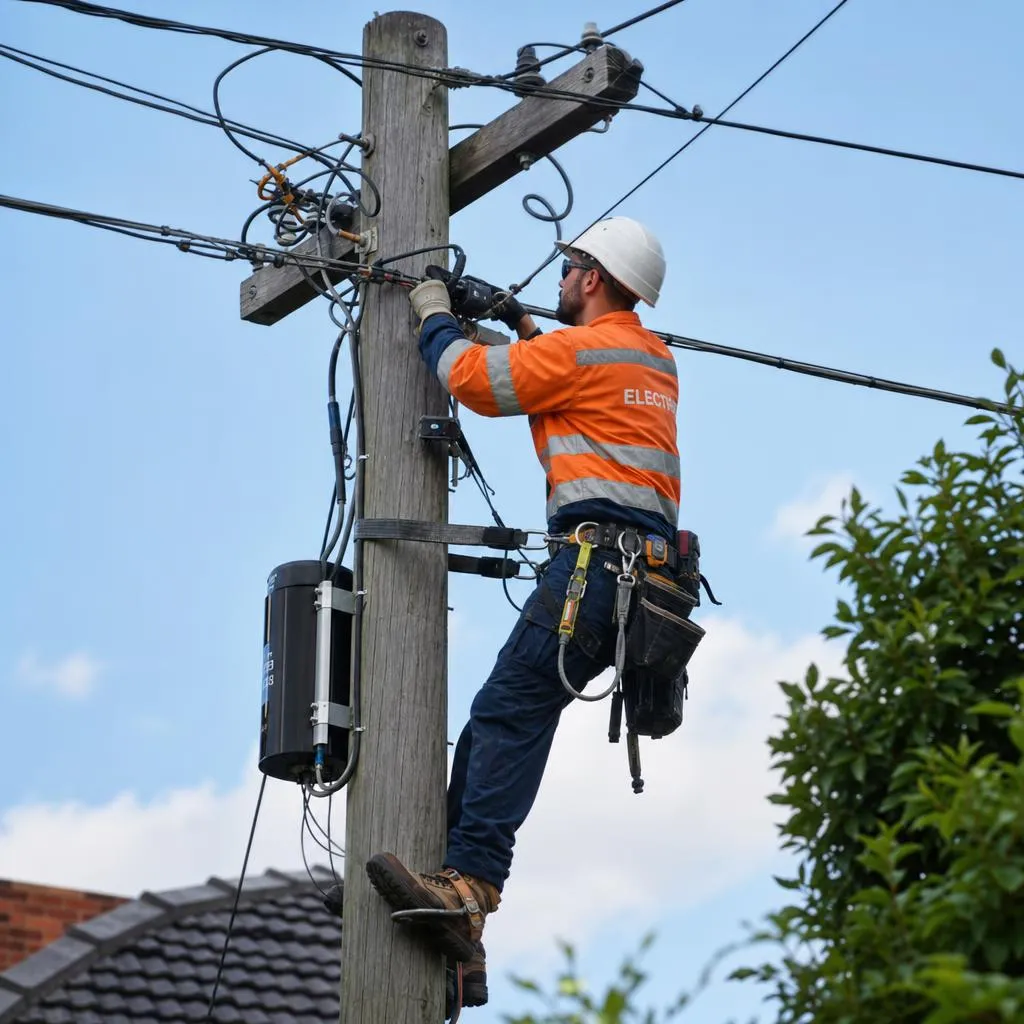
A private power pole is a pole located on private property that carries the network's service line to a building, and it is owned and maintained by the property owner — not by Ausgrid, Endeavour Energy or Essential Energy. Many Sydney owners are surprised to learn a pole on their land is theirs to maintain, and only discover it when the network issues a defect notice requiring repair or replacement. Because a private pole carries the network connection, work on it is Level 2 ASP work.
How to Tell If a Pole Is Private
As a general rule, poles on the public street or verge that carry the distribution network are network-owned, while a pole standing on your land that exists specifically to bring supply to your building is a private pole. Rural, semi-rural and large-block properties in Sydney's outer suburbs commonly have one or more private poles, but they also appear on ordinary suburban blocks where the service had to be carried some distance from the street.
If the point of attachment — where the service line lands — is on a pole on your property rather than on your building, that pole is almost always private. When there is doubt, a Level 2 ASP or the network can confirm ownership.
The consequence of ownership is straightforward: a private pole is the owner's asset to inspect, maintain and replace, and any hazard it presents is the owner's responsibility to address. Because it is not the network's asset, no one else will proactively maintain it — the responsibility sits entirely with the property owner until the pole is dealt with.
What Goes Wrong With Private Poles
Timber private poles are the most common in older Sydney installations, and they degrade over decades through rot at ground level, termite attack, splitting, and general weathering. A pole that leans, has soft or hollow timber at the base, or shows cracking around the fittings is a serious hazard because it carries live conductors.
The hardware on the pole ages too: the point of attachment, insulators, and any pole-top fittings can corrode or loosen. Storm damage — impact from falling branches or wind loading — can crack or bring down a pole with little warning. Because the pole carries the service line, a failure can drop live conductors, which is why the network takes pole defects seriously.
Vegetation is a related issue. Trees growing into the service line off a private pole are the owner's responsibility to manage, and are a common cause of storm-season faults and fire risk.
Inspection, Defect Notices and Replacement
The network periodically inspects the area's supply infrastructure, and where it finds a private pole in poor condition it issues a defect notice to the owner, classifying the urgency of the repair. A pole assessed as an imminent hazard must be dealt with quickly; a lower-priority defect gives more time but still must be rectified.
Replacing a private pole is a Level 2 ASP job involving disconnection of the supply, removal of the old pole, installation of the new pole (timber, steel or concrete depending on the situation), transfer of the point of attachment and service line, inspection and re-energisation. Where the pole is in a difficult position, additional access equipment may be required.
Sydney Power Group carries out private pole inspection, repair and replacement, and can rectify a network defect notice on a pole across all three NSW network areas — see our private poles and power pole inspection services, or find private power pole replacement Sydney coverage for your suburb.
Staying Ahead of a Pole Problem
The best way to avoid an urgent, expensive pole replacement is a periodic inspection, particularly for older timber poles. A visual check for lean, base rot, cracking and fitting corrosion can identify a developing problem before it becomes a defect notice or a storm-season failure.
If you have received a defect notice, act on it rather than waiting — an unaddressed pole defect can escalate to disconnection of your supply by the network, and an imminent-hazard classification demands prompt attention. A Level 2 ASP can inspect, quote and rectify the defect and lodge the required paperwork with the network.
Because a private pole is part of your property's connection to the grid, keeping it sound protects both your supply and the safety of everyone around it. If your pole already needs attention, our private power pole replacement service covers access, pole type, network coordination, the planned supply interruption and handover — and quotes are free after an on-site assessment.
Shared Poles and Multiple Properties
A complication that catches many owners out is the shared private pole — a single pole on or between properties that carries the service to more than one dwelling. This is common where a battle-axe block, a subdivided property, or a rural holding has one pole feeding several buildings, and it raises the question of who is responsible when the pole needs work.
Where a private pole serves multiple properties, the maintenance responsibility is typically shared between the owners it supplies, and a defect notice may be issued to more than one party. This can make organising a replacement more involved, because the affected owners need to agree on the work and share the cost. A Level 2 ASP can assess the pole, quote the work and coordinate the disconnection so all the connected supplies are handled at once.
If you are buying a property with a private pole — particularly a shared one — it is worth establishing its condition and ownership arrangement before settlement, as an undisclosed pole defect can become an unexpected expense. A pre-purchase pole inspection by a Level 2 ASP gives a clear picture of what you are taking on.
Frequently Asked Questions
How do I know if a power pole on my property is private?+
If the pole exists to carry the service line to your building and stands on your land — rather than being a network pole on the street or verge — it is almost certainly private. If the point of attachment is on the pole, it is very likely yours. A Level 2 ASP or the network can confirm.
Who is responsible for maintaining a private power pole?+
The property owner. A private pole is the owner's asset to inspect, maintain and replace, including managing vegetation growing into the service line off the pole. The network is not responsible for private poles.
What is a defect notice on a private pole?+
It is a notice issued by the network after inspection when a private pole is found to be in poor or unsafe condition. It classifies the urgency, and the owner must arrange rectification by a Level 2 ASP within the required timeframe.
What happens if I ignore a pole defect notice?+
An unaddressed defect can escalate, and the network may ultimately disconnect your supply. An imminent-hazard classification requires prompt action because the pole carries live conductors. It's best to arrange rectification quickly.
What does replacing a private pole involve?+
It's a Level 2 ASP job: disconnecting the supply, removing the old pole, installing a new pole, transferring the point of attachment and service line, inspecting and re-energising. Difficult access can require additional equipment.
How often should a private pole be inspected?+
Older timber poles benefit from periodic inspection — a visual check for lean, base rot, cracking and fitting corrosion can catch problems before they become defect notices or storm-season failures. A Level 2 ASP can carry out the inspection.
Can a private pole be replaced with steel or concrete?+
Yes. Depending on the situation, a private pole can be replaced with timber, steel or concrete. A Level 2 ASP recommends the most suitable option for the location and load.
Call us now for a no-obligation quote. Emergency response available 24/7.
0466 125 125Get a Free QuoteRelated Services
What Sydney Says About Us
Don't take our word for it — read genuine reviews from real customers on our Google profile, or leave one after your job is done.
Read Our Google Reviews
Need a Level 2 ASP Electrician?
Free assessment on any network electrical job. Emergency? We answer around the clock.