Assets & Equipment
The Point of Attachment: Where Your Property Meets the Grid
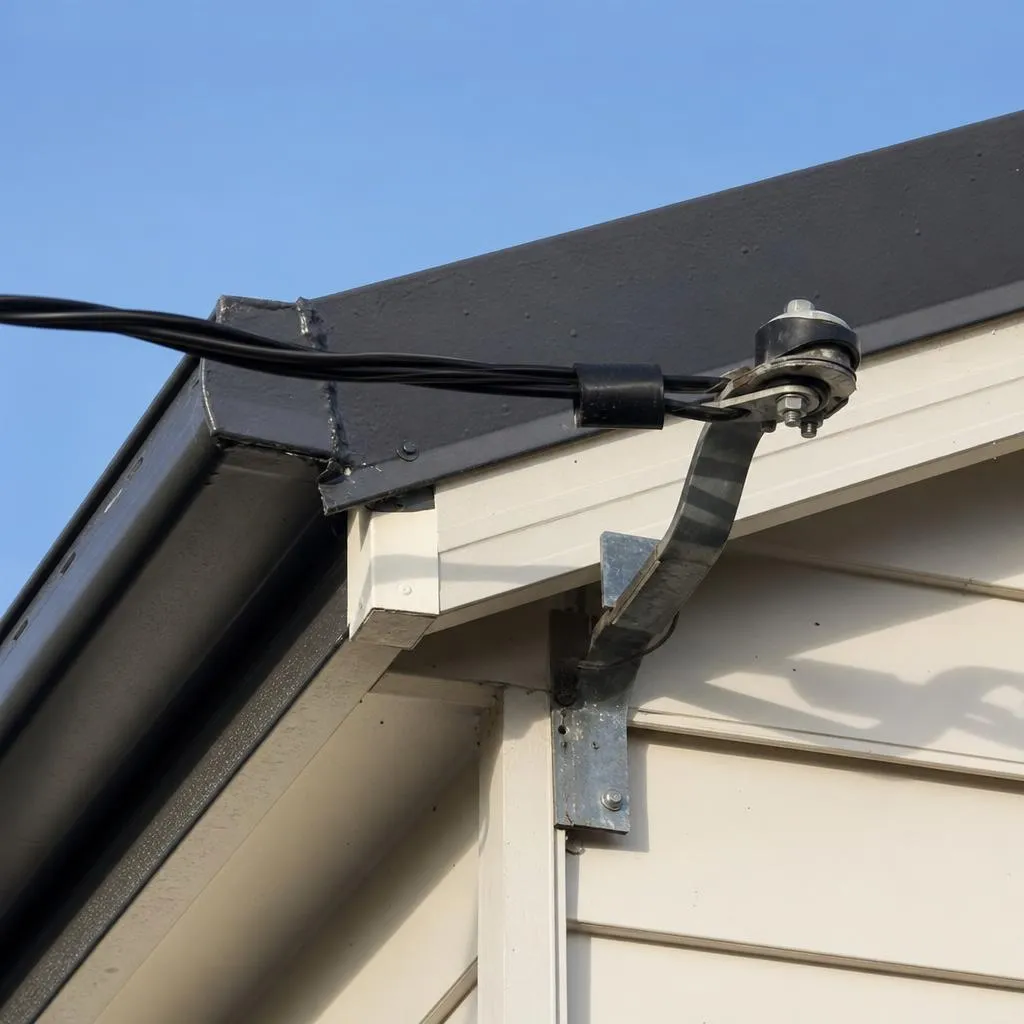
The point of attachment is the fitting — usually a bracket, hook or insulator — where the network's overhead service line physically connects to your building or private power pole. It is one of the smallest components in your electrical connection, but it carries enormous significance: it is the boundary where the network's service mains end and your customer-side installation begins. When it fails, it can drop live conductors, which is why repairs are Level 2 ASP work.
What the Point of Attachment Does
On an overhead supply, the service line runs from the network pole to your property and terminates at the point of attachment. From there, the consumer mains carry the supply down to the meter and main switchboard. The point of attachment therefore bears the mechanical load of the service line — its weight, wind loading, and any tension — as well as being the electrical termination point.
The fitting is designed to hold the service line securely against decades of weather and movement. It is commonly mounted on a bracket fixed to the fascia, wall or roof of a building, or on the top of a private pole. Because it takes constant mechanical strain, it is a component that genuinely wears out over time.
In many cases the attachment bracket and its fixing are the customer's responsibility, while the service line up to it belongs to the network — which is exactly why the point of attachment is the classic grey area in connection ownership.
Who Owns the Point of Attachment
The general principle is that the network owns and maintains the service line up to the point of attachment, and the customer owns everything from the attachment inward — the bracket in many cases, the consumer mains, and the rest of the installation. This is the boundary that decides who is responsible when something goes wrong at the connection.
In practice, a failing point of attachment — one pulling away from the building, with a corroded bracket, or with rotten timber behind the fixing — is the property owner's problem to rectify, and it is Level 2 ASP work because the repair involves the network connection. The network is engaged where the service line itself must be handled.
Understanding this boundary saves a great deal of confusion. Homeowners often assume anything involving the overhead line is the network's, only to find that the attachment and everything downstream is theirs.
When the Point of Attachment Fails
Common failures include the bracket corroding or working loose, the fascia or wall behind it rotting so the fixing loses its grip, and storm loading pulling the attachment away from the building. Any of these can leave the service line sagging dangerously low or, in the worst case, bring live conductors down — a serious hazard.
Warning signs include the service line sagging lower than it used to, a visibly leaning or loose bracket, cracking or rot in the timber behind the attachment, and any movement in the fitting. Because the consequences of failure are so serious, these signs warrant prompt attention.
A Level 2 ASP repairs or replaces the point of attachment — installing a new bracket, making good the fixing structure, and re-terminating the service line — often coordinating a brief disconnection with the network so the work is done safely. Our point of attachment repairs service covers exactly this work.
Repairs, Relocation and New Builds
Beyond failure, the point of attachment comes into play during renovations and new builds. Extending a roofline, changing a fascia, or building an extension can require the attachment to be relocated so the service line clears the new structure with the required clearances. Getting this right is essential — insufficient clearance over a new roof or deck is a compliance and safety issue.
For a new connection, the Level 2 ASP establishes the point of attachment as part of designing the service and consumer mains, ensuring the service line has adequate ground and structure clearance and that the attachment is mechanically sound.
Sydney Power Group repairs, replaces and relocates points of attachment across all three NSW network areas, coordinating with the distributor where the service line must be handled and ensuring the finished connection meets the Service and Installation Rules.
Clearances and Why They Matter
The height and clearance of the service line above the ground and around structures is governed by the NSW Service and Installation Rules, and the point of attachment is what sets it. The line has to sit high enough that it can't be reached from the ground, a driveway, a deck or a roof, and it has to keep a safe distance from windows, balconies and anything a person could climb onto.
This is why a renovation that changes a roofline or adds a first-floor deck so often forces the attachment to be relocated: what was a compliant clearance over a single-storey house can suddenly be dangerously low over a new upper level. Building over or too close to an existing service line without addressing the attachment is both a safety hazard and a compliance failure that will attract a defect notice.
When we relocate or install a point of attachment, we set it so the service line keeps its required clearances over the finished structure and the ground beneath it, allowing for the natural sag of the line and for future settlement. Getting the attachment position right is the difference between a connection that quietly does its job for decades and one that becomes a recurring problem.
Frequently Asked Questions
What is the point of attachment?+
It's the fitting — usually a bracket, hook or insulator — where the network's overhead service line connects to your building or private pole. It marks the boundary between the network's service line and your customer-side installation.
Who owns the point of attachment?+
The general principle is that the network owns the service line up to the point of attachment, and the customer owns the attachment (in many cases) and everything downstream. A failing attachment is therefore the property owner's responsibility to rectify.
What are the signs the point of attachment is failing?+
Look for the service line sagging lower than before, a leaning or loose bracket, corrosion in the fitting, and cracking or rot in the timber behind it. Because failure can drop live conductors, these signs warrant prompt attention.
Is repairing the point of attachment a Level 2 job?+
Yes. Because the repair involves the network connection, it is Level 2 ASP work — often requiring a coordinated disconnection with the network so the service line can be handled safely.
Do I need to move the point of attachment for a renovation?+
Sometimes. Extending a roofline or building an extension can require the attachment to be relocated so the service line keeps the required clearances over the new structure. A Level 2 ASP assesses and carries out the relocation.
The service line to my house is sagging — is that dangerous?+
It can be. A sagging line may indicate a failing point of attachment and reduced ground clearance, which is a safety hazard. Keep clear of the line and have it assessed promptly by a Level 2 ASP.
Call us now for a no-obligation quote. Emergency response available 24/7.
0466 125 125Get a Free QuoteRelated Services
What Sydney Says About Us
Don't take our word for it — read genuine reviews from real customers on our Google profile, or leave one after your job is done.
Read Our Google Reviews
Need a Level 2 ASP Electrician?
Free assessment on any network electrical job. Emergency? We answer around the clock.