Assets & Equipment
Service Mains: The Line Between Your Property and the Grid
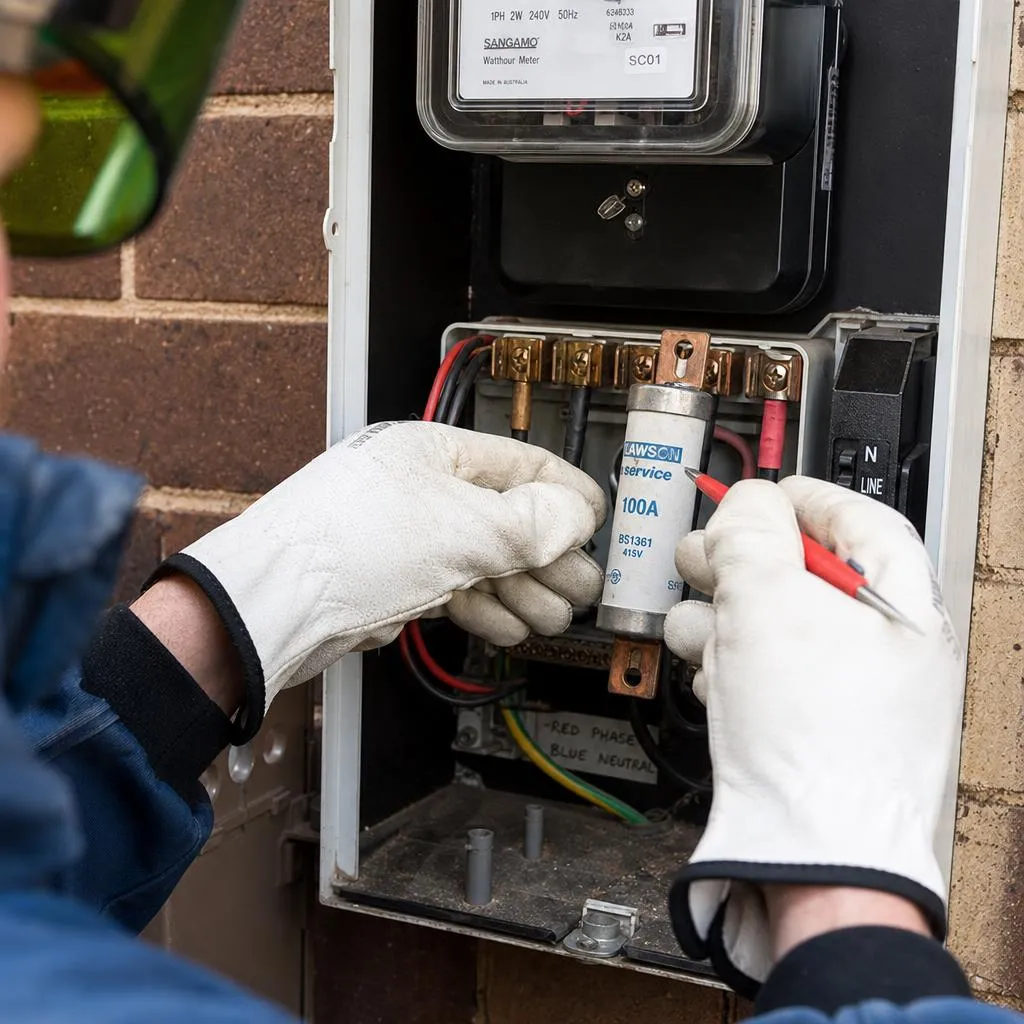
The service mains are the conductors that carry electricity from the distribution network — the poles, pillars and cables owned by Ausgrid, Endeavour Energy or Essential Energy — to the connection point at your property. They are the physical link between the grid and your consumer mains, and they sit at the boundary where network ownership ends and the customer's installation begins. Understanding where that boundary falls is the key to knowing who pays for what and who is licensed to touch it.
Overhead vs Underground Service Mains
An overhead service is the aerial line that runs from a network pole to the point of attachment on your building or private pole. It is the most common arrangement in established Sydney suburbs. An underground service runs below ground from a pillar box, network pole or pit to your property, and is standard in newer estates and increasingly preferred for its appearance and storm resilience.
Both arrangements do the same job — deliver supply to the connection point — but they fail and age differently. Overhead lines are exposed to tree contact, storm damage and UV degradation, while underground services are vulnerable to ground movement, excavation strikes and, over long periods, moisture ingress at joints.
Converting an overhead service to underground (an overhead-to-underground conversion) is a popular upgrade in Sydney, but it is Level 2 ASP work involving trenching, conduit, new cable and coordination with the network.
Where Network Ownership Ends
For an overhead supply, the network owns and maintains the service line up to the point of attachment. From the point of attachment inward — including the attachment bracket in many cases, the consumer mains and everything downstream — is the customer's responsibility. For underground supplies the boundary is usually the connection point at the pillar or pole.
This is why a fallen or damaged overhead service line is reported to the network as an emergency, while a failed point of attachment or degraded consumer mains is a job for a Level 2 ASP engaged by the property owner. The point of attachment is the single most misunderstood part of this boundary, and getting it wrong leads to disputes about who should pay.
Sydney Power Group works right up to that boundary: we handle the customer-side connection, the point of attachment, and coordinate with the network where the service line itself needs the distributor's involvement.
When Service Mains Work Is Needed
New service mains are installed whenever a property connects to the grid for the first time — a new build, a subdivision, or a granny flat that needs its own supply (see our new network connection service). Existing service mains come into play during relocations (moving a service to accommodate a new driveway or extension), upgrades from single-phase to three-phase, and after storm or vehicle damage. Where the service lands on a private power pole, the pole itself is often assessed at the same time.
Underground service faults can be harder to diagnose than overhead ones because the damage is hidden. Symptoms include intermittent supply, tripping under load, or a complete loss of one phase. A Level 2 ASP can test the supply and, where the fault lies on the customer side, rectify it; where it lies on the network side, the distributor is engaged.
For urgent situations — a service line brought down in a storm, a damaged point of attachment, or a loss of supply — our 24/7 emergency team attends to make the site safe and restore power as quickly as the network approvals allow.
Planning a New or Upgraded Connection
A new connection begins with a network application to establish the connection point and the available supply. The Level 2 ASP then designs and installs the service and consumer mains, metering position and point of attachment to suit, before arranging inspection and energisation.
For upgrades, the same principle applies but with the added step of coordinating a disconnection so the changeover happens safely. A supply upgrade usually brings the switchboard and metering into scope too, because both must suit the new capacity. Whether the service is overhead or underground, the finished installation must comply with the NSW Service and Installation Rules and AS/NZS 3000.
Because we hold current ASP accreditation across Ausgrid, Endeavour Energy and Essential Energy, Sydney Power Group can manage the whole process — application, installation, inspection and energisation — anywhere in greater Sydney.
Ageing Service Mains and Storm Season
Sydney's older suburbs are full of overhead service mains that have been in place for decades, and age shows in predictable ways. UV exposure hardens and cracks the insulation, connections at the point of attachment corrode, and the physical strain of wind loading slowly loosens fittings. An ageing overhead service is one of the most common causes of intermittent supply problems that seem to come and go with the weather.
Storm season concentrates these failures. High winds bring branches into contact with the service line, drive water into deteriorated connections, and put sudden mechanical loads on attachments that were already marginal. A service line that has been quietly degrading for years often fails during the first serious storm, which is why the network's storm-season workload is dominated by service and connection faults.
Proactive attention pays off here. Clearing vegetation away from the service line, replacing a tired point of attachment before it lets go, and converting a badly perished overhead run to underground all reduce the risk of a mid-storm outage. Where a service line does come down, treat it as an emergency, keep well clear, and call for help — our team can attend to make the site safe and coordinate the restoration with the network.
Frequently Asked Questions
What is the difference between service mains and consumer mains?+
Service mains are the network-owned cables that run from the grid to the connection point at your property. Consumer mains are the customer-owned cables that run from that connection point to your main switchboard. The connection point (often the point of attachment) is the boundary between them.
Who owns the overhead service line to my house?+
The network (Ausgrid, Endeavour Energy or Essential Energy) owns and maintains the overhead service line up to the point of attachment on your building or private pole. From the point of attachment inward, the wiring is your responsibility.
Can I convert my overhead service to underground?+
Yes. Overhead-to-underground conversions are common in Sydney for appearance and storm resilience. It is Level 2 ASP work involving trenching, conduit, new cable and network coordination, and is quoted after an on-site assessment.
My service line was brought down in a storm — who do I call?+
If a live line is down, keep well clear and treat it as an emergency. The network attends network-side hazards, while a Level 2 ASP handles a damaged point of attachment or customer-side connection. Our emergency team can attend to make the site safe and coordinate the restoration.
Do I need a new service connection for a granny flat?+
Often, yes — a separate dwelling frequently needs its own connection and metering. A Level 2 ASP assesses the existing supply and arranges the new service, consumer mains and metering with the network.
How is an underground service fault found?+
A Level 2 ASP tests the supply to isolate where it fails. Customer-side faults can be rectified directly; network-side faults are referred to the distributor. Underground faults are harder to locate than overhead ones because the damage is hidden.
Call us now for a no-obligation quote. Emergency response available 24/7.
0466 125 125Get a Free QuoteRelated Services
What Sydney Says About Us
Don't take our word for it — read genuine reviews from real customers on our Google profile, or leave one after your job is done.
Read Our Google Reviews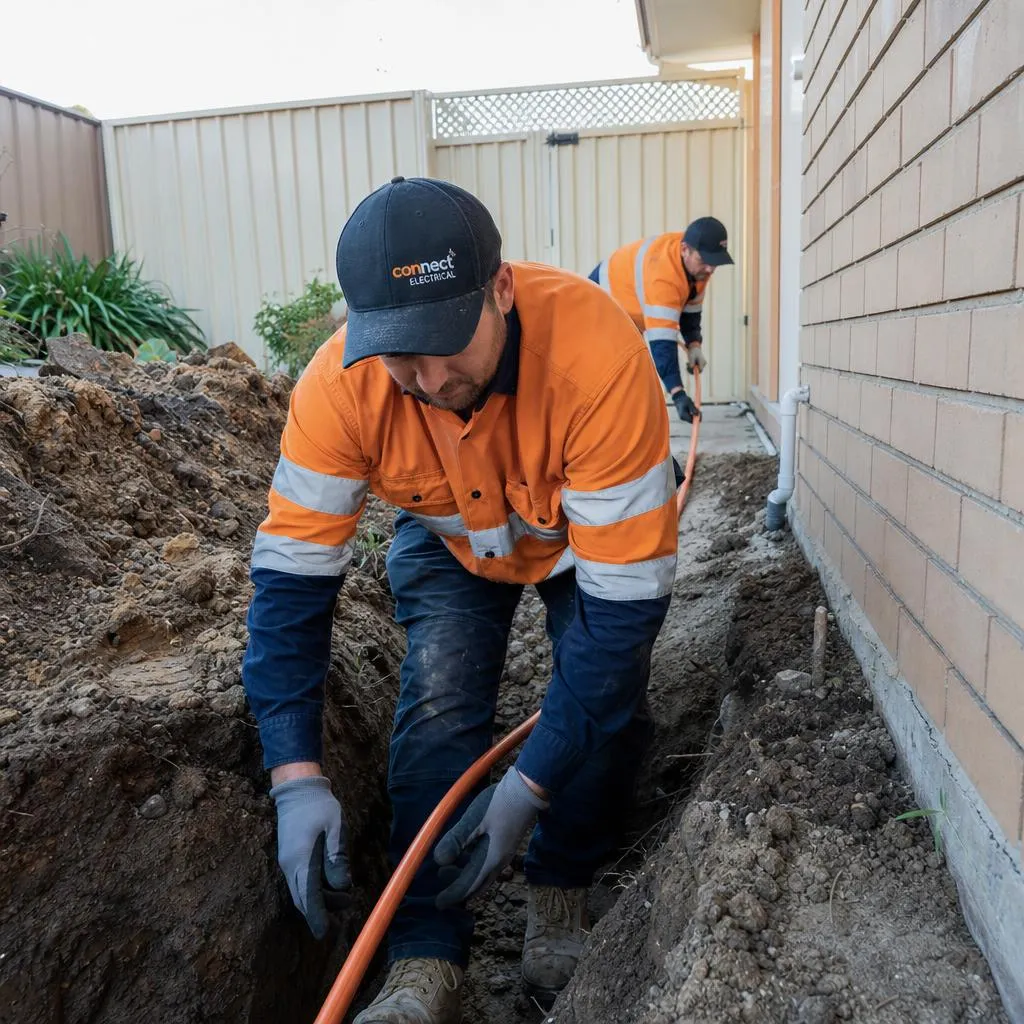
Need a Level 2 ASP Electrician?
Free assessment on any network electrical job. Emergency? We answer around the clock.