Networks
Underground Services: How Underground Mains Work in NSW
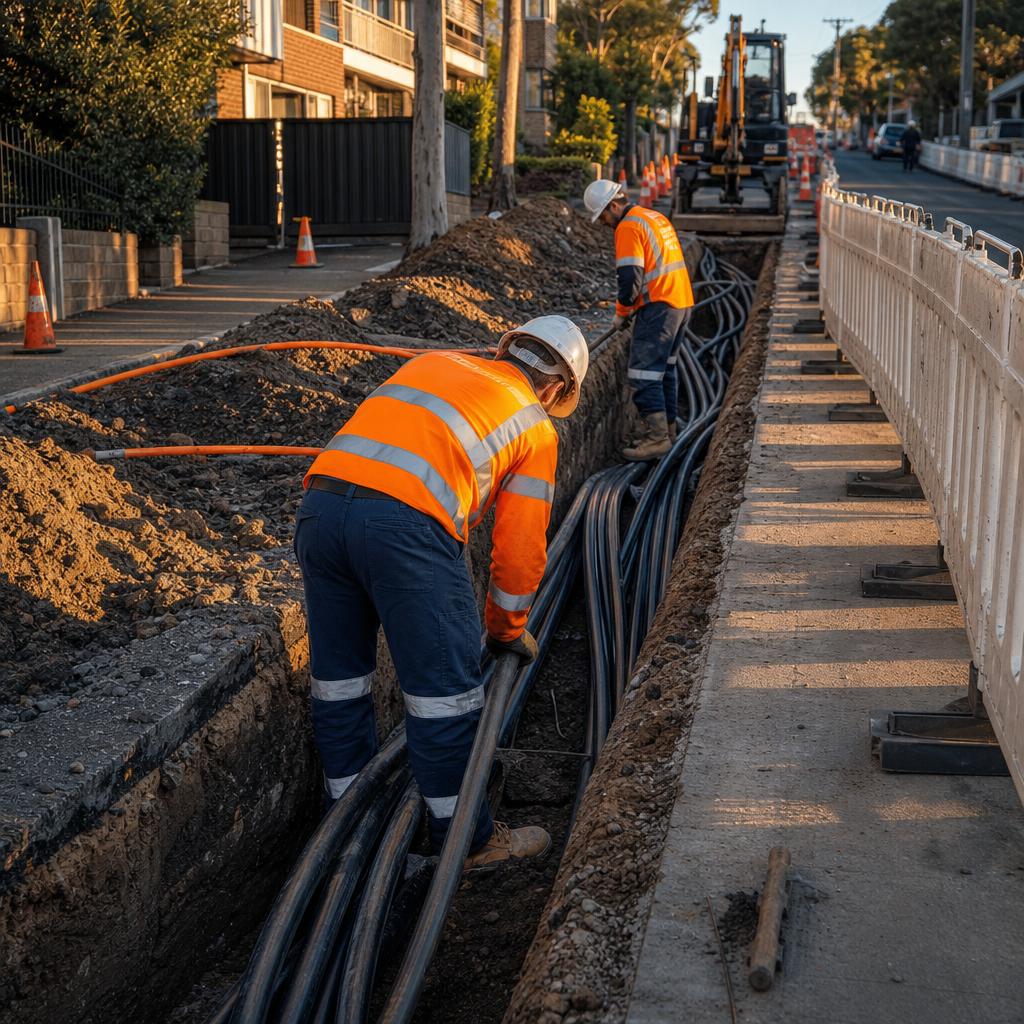
More and more of Sydney runs its power underground. New estates, undergrounding programs and property owners who simply prefer a tidy streetscape all rely on underground consumer mains rather than overhead service lines. Underground services are safer from storm damage and vehicle strikes, but they come with their own set of rules around depth, cover, conduit and connection — all of which a Level 2 ASP manages.
What an Underground Service Is
An underground service is the buried cable that carries electricity from the distribution network to your property's metering and switchboard. Instead of an overhead service line running through the air to a bracket on your roof or a pole, the conductors run inside conduit in a trench, usually connecting at a network pillar box, a pit or a distribution kiosk in the street.
The point where the network's responsibility ends and yours begins is the connection point — typically the pillar or pit. From there, the underground consumer mains run to your meter position. A Level 2 ASP is licensed to make the network connection and install the underground mains up to and including the metering and main switch.
Pillar Boxes, Pits and Kiosks
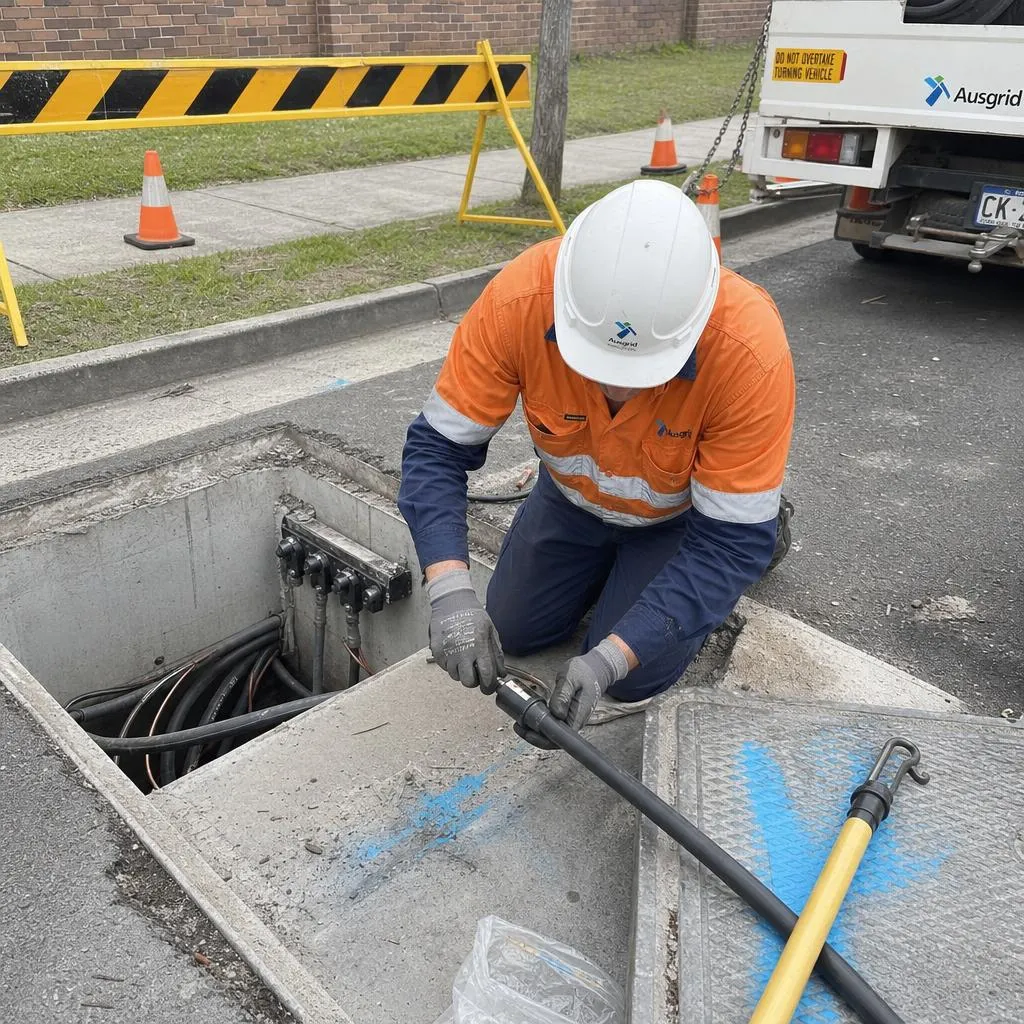
In an underground network you won't see poles and wires — instead the low-voltage supply is distributed through green pillar boxes, underground pits and, on larger developments, padmount substations and kiosks. Your service connects to the nearest suitable pillar or pit assigned by the distributor.
These assets belong to the network operator, so any work inside them is Level 2 work. When your ASP connects your service, they open the pillar, terminate your conductors onto the network busbar or connection block, and confirm phasing and polarity before energising. Tampering with a pillar box by anyone other than an accredited person is illegal and dangerous.
Trenching, Depth and Cover Rules
Getting the trench right is where most of the on-site effort goes. The NSW Service and Installation Rules and AS/NZS 3000 set minimum depths of cover for underground cables — deeper under driveways and trafficable areas than under garden beds — along with requirements for marker tape, backfill and mechanical protection.
Conductors run inside orange electrical conduit sized to the cable, with draw pits or bends kept within pulling limits. Where the route crosses other services — water, gas, telecommunications — separation distances must be maintained. A well-planned trench also considers future works: sharing a trench with the temporary builders supply or with communications conduit can save on excavation.
Because trenching is disruptive, coordination matters. Sydney Power Group plans routes to minimise reinstatement of driveways, paving and landscaping, and works to the distributor's approved design before any digging begins.
Why Choose Underground Over Overhead
Underground services are protected from the weather. Storms, falling branches and high winds — all of which routinely bring down overhead lines across Sydney — have no effect on a buried cable. They are also immune to vehicle strikes on poles and can't be damaged by nearby crane or truck movements.
The trade-off is that underground faults are harder to locate and repair, and the initial installation costs more because of the trenching involved. For most property owners, though, the reliability and clean appearance make underground the preferred option — and in many new estates it is mandated by the developer or council.
The Role of a Level 2 ASP
A Level 2 ASP handles the whole underground service: confirming the connection point with the distributor, preparing the connection application, coordinating or carrying out the trenching and conduit, installing and terminating the underground mains, and making the live connection at the pillar or pit.
They also handle related work such as network connections, converting an overhead service to underground, and rectifying defects on existing underground supplies. Because the connection is on the network side, using an accredited provider isn't optional — it's the law in NSW.
Frequently Asked Questions
What is an underground service?+
It is the buried cable that carries power from the distribution network — usually via a pillar box or pit in the street — to your property's meter and switchboard, running inside conduit in a trench rather than overhead.
Who can connect an underground service to the network?+
Only a licensed Level 2 Accredited Service Provider. The connection is made inside network-owned assets like pillar boxes and pits, which only accredited people are permitted to work in.
How deep does an underground electrical cable need to be?+
Minimum depths of cover are set by the NSW Service and Installation Rules and AS/NZS 3000, with greater depths required under driveways and trafficable areas than under garden beds. Marker tape and mechanical protection are also required.
What is a pillar box?+
A pillar box is the green freestanding enclosure that distributes low-voltage supply in an underground network. Your service typically connects to the nearest pillar assigned by the distributor. Pillars are network property.
Can I convert my overhead service to underground?+
Yes. A Level 2 ASP can convert an overhead service to underground, coordinating the trenching, conduit, new connection point and a disconnection and reconnection so the supply transitions safely.
Is underground more reliable than overhead?+
Underground services are protected from storms, falling branches and vehicle strikes, so they are generally more reliable in bad weather. The trade-off is that faults are harder to locate and the installation costs more due to trenching.
Do I need approval before trenching for an underground service?+
Yes. The distributor approves the connection point and design, and the trench must comply with depth, cover, separation and conduit rules. Your ASP secures the approval before any excavation begins.
Call us now for a no-obligation quote. Emergency response available 24/7.
0466 125 125Get a Free QuoteRelated Services
What Sydney Says About Us
Don't take our word for it — read genuine reviews from real customers on our Google profile, or leave one after your job is done.
Read Our Google Reviews
Need a Level 2 ASP Electrician?
Free assessment on any network electrical job. Emergency? We answer around the clock.