Overhead & Underground Mains
How to Convert Overhead Power Lines to Underground
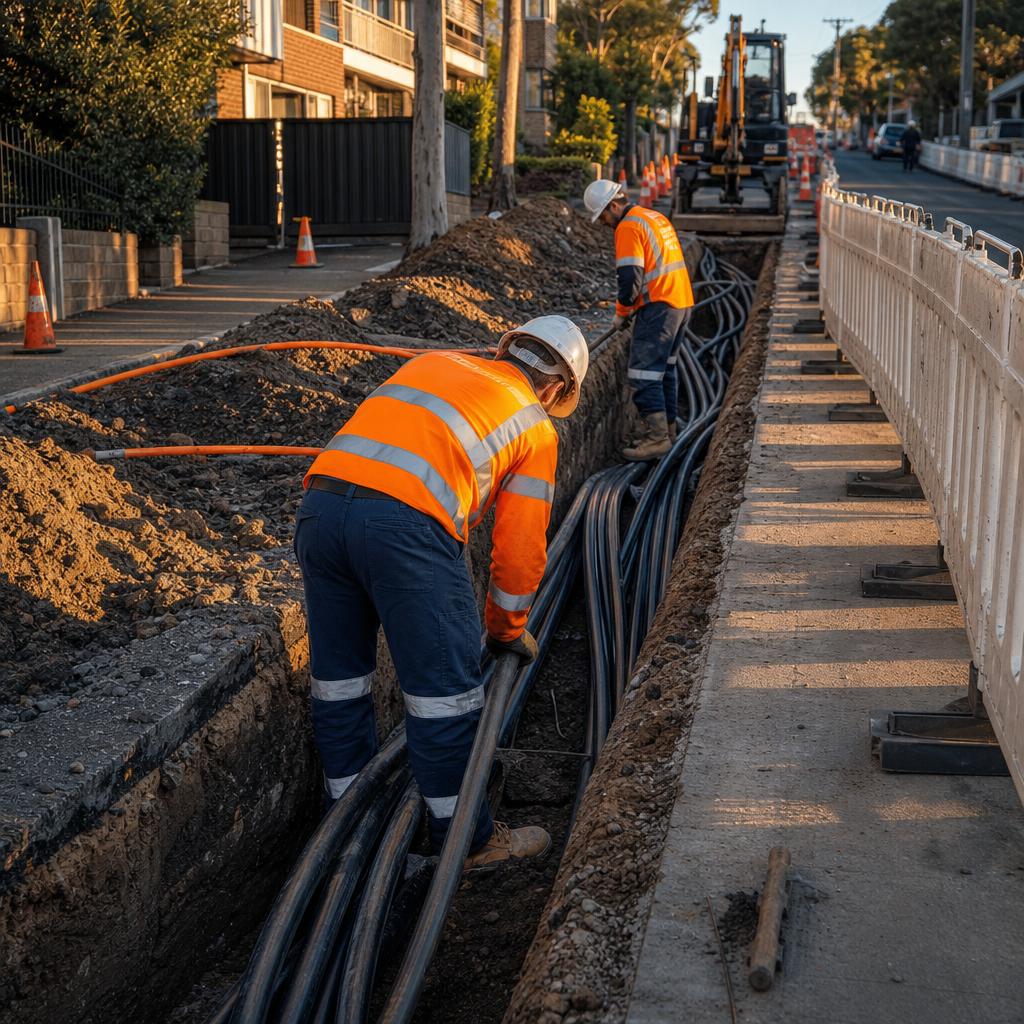
Overhead-to-underground conversions come up most often during major renovations, when a homeowner wants to remove visible lines crossing the property, or when repeated storm damage makes underground the more sensible long-term option.
The Process
The job starts with a network application to your distributor, since you're changing the physical point of connection. We then plan the trench route from your switchboard to the property boundary or pole, coordinating with any other underground services (gas, water, telecoms) already on site.
Trenching and cable-laying follow, with underground consumer mains cable rated for direct burial. Once connected, the old overhead service is formally disconnected and removed by the network operator or under their authorisation.
Timing and Coordination
A straightforward residential conversion typically takes one to two days depending on trench length and ground conditions. We coordinate the outage window with your distributor to minimise downtime, and time the disconnection of the old overhead line to happen the same day the underground connection goes live.
Is It Worth It?
Beyond aesthetics, underground conversion removes the risk of storm-related outages from fallen branches or wind damage — historically the single biggest cause of unplanned outages for Sydney properties with overhead supply. If you're already renovating or landscaping, it's often the most cost-effective time to convert.
Call us now for a no-obligation quote. Emergency response available 24/7.
0466 125 125Get a Free QuoteRelated Services
More from the Blog
Need a Level 2 ASP Electrician?
Free assessment on any network electrical job. Emergency? We answer around the clock.